Money

There is some getting used to using a foreign currency when traveling abroad in any country.
“What is it called?”
“What is the symbol?”
“What is the exchange rate?”

Those are all questions that need to be answered. It isn’t at all like an American traveling to Mexico, where they might still accept American dollars, or even Canada, where their dollar is both still called a “dollar” and is similar to the value of one in the US.

The current exchange rate (as I type this) is $1 – ₱63.95 (Philippine pesos). An American has to continually keep this in mind, as the cost of goods will get measured in our minds according to USD. But that is how all measurements work. Here they use meters, grams, and celsius too. I’m always using my calculator (thank heavens for iPhone conversions) to miles/feet, pounds/ounces, and Fahrenheit.

It’s made a bit more complicated by the general economy and cost-of-living here. Basically, many things here are pocket-change compared to the US cost.

For example: I had to go to a medical clinic recently. I had a small infection and knew I just needed some antibiotics. The cost of seeing the doctor, a lung x-ray, and prescriptions basically equalled what you might pay for a decent dinner in the US…not a fancy dinner…but a nicer sit-down dinner. But that was it. There won’t be some bill in the mail a few months from now.

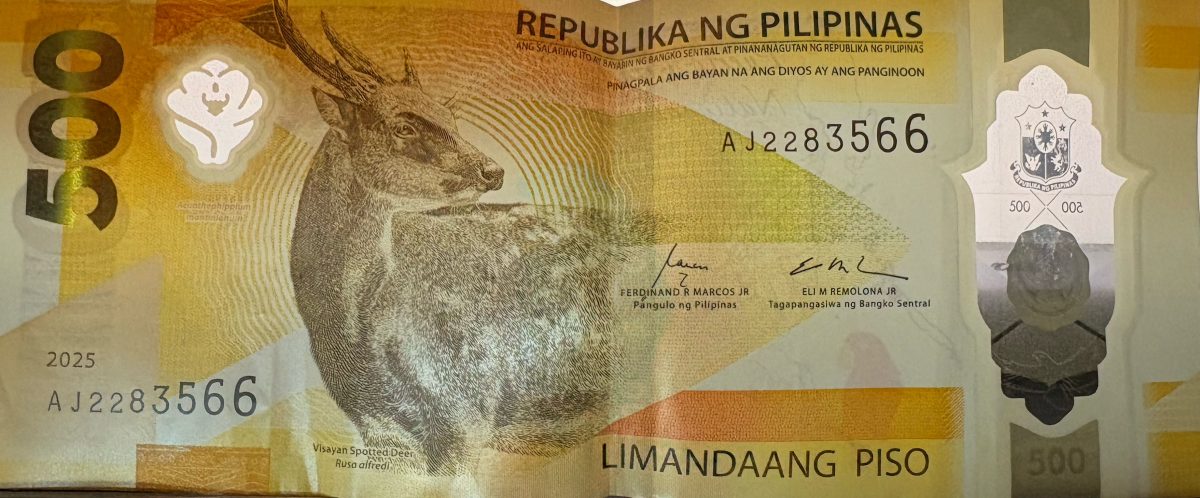
There is a challenge with coins, though. First off, the smallest paper bill that I’ve encountered is ₱50. that means 1,5, and 20 pesos are coins, as well as all the smaller cents (and yes, they are called “cents”). Check out the picture below.
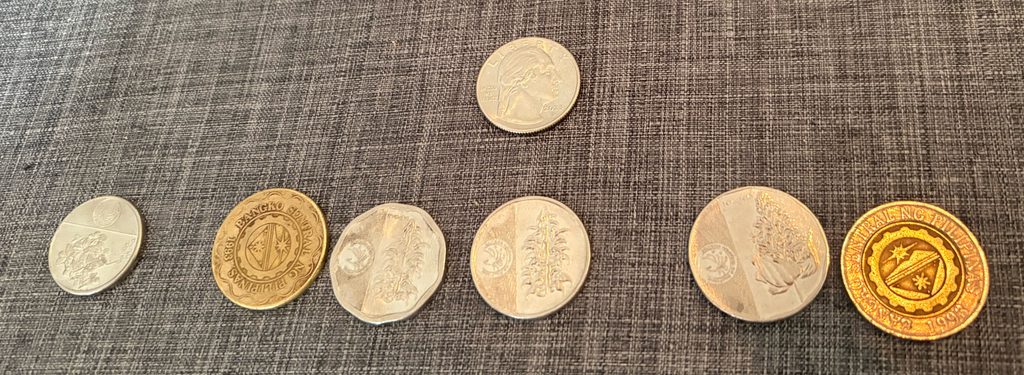
Now, I’ll explain what you are seeing. Yes, that is an American quarter on top, just for scale. I think it is a little bit bigger than the ₱1 coin on the left and the 3 ₱5 coins under it.

Oh wait. In case you missed that, yes there are 3 different ₱5 coins in current circulation and yes, they look different. The left-most one is gold-ish, the middle is shaped like a rounded octagon, and the right of the 3 is just silver and round.

On the right are the two ₱10 coins. Again, yes there are two. That means that you could have 6 very different coins in your pocket, only representing 3 denominations, and they are all different. Confusing?

But wait, there are also ₱20 coins (I think there is only 1 main type you might encounter. Plus, there are smaller cents.

This means that there are always coins jingling around your pocket.

You can also expect numerous places to suddenly let you know that they don’t accept cash, and then you either have to pay with a credit card, or an app on your phone.

Christmas

The Philippines is into Christmas far more than we in America or Europe, can imagine.

Countdown to Christmas

WeeksDaysHoursMinutesSeconds
7
:
2
:
2
1
:
0
0
:
3
2

The Philippines is into Christmas far more than we in America or Europe, can imagine.

Christmas season does not start in December, the way it does in most of the world. In America, we grouse that stores have Christmas stuff for sale starting in early October. Part of our complaint is that they simultaneously want us to buy lots of gifts and decorations, but they also don’t want to acknowledge that Christmas even exists. Instead, they call it “holiday.”

Of course, part of that is due to the fact that we also have Jewish people who celebrate Hanukkah. We have other religions that don’t celebrate Christmas at all, or the commercial side of it. We also have Kwanza, which is a made-up holiday for people who don’t want to acknowledge religion at all, but worship their racial heritage (if you get upset at that, then rage over there in the corner. I can’t hear you anyway).

But Philippines has none of that. It is officially a Catholic country, and they lean in heavy on that most of the time. I’m not Protestant, not Catholic but then again, I don’t get offended by other people’s expressions of their own faith. I recognize that people have a right to do things somewhat different than I do.

Protestants definitely do celebrate Christmas, and there is actually far more that Catholics and Protestants have in common with Protestants, and I’m learning that more and more every day.

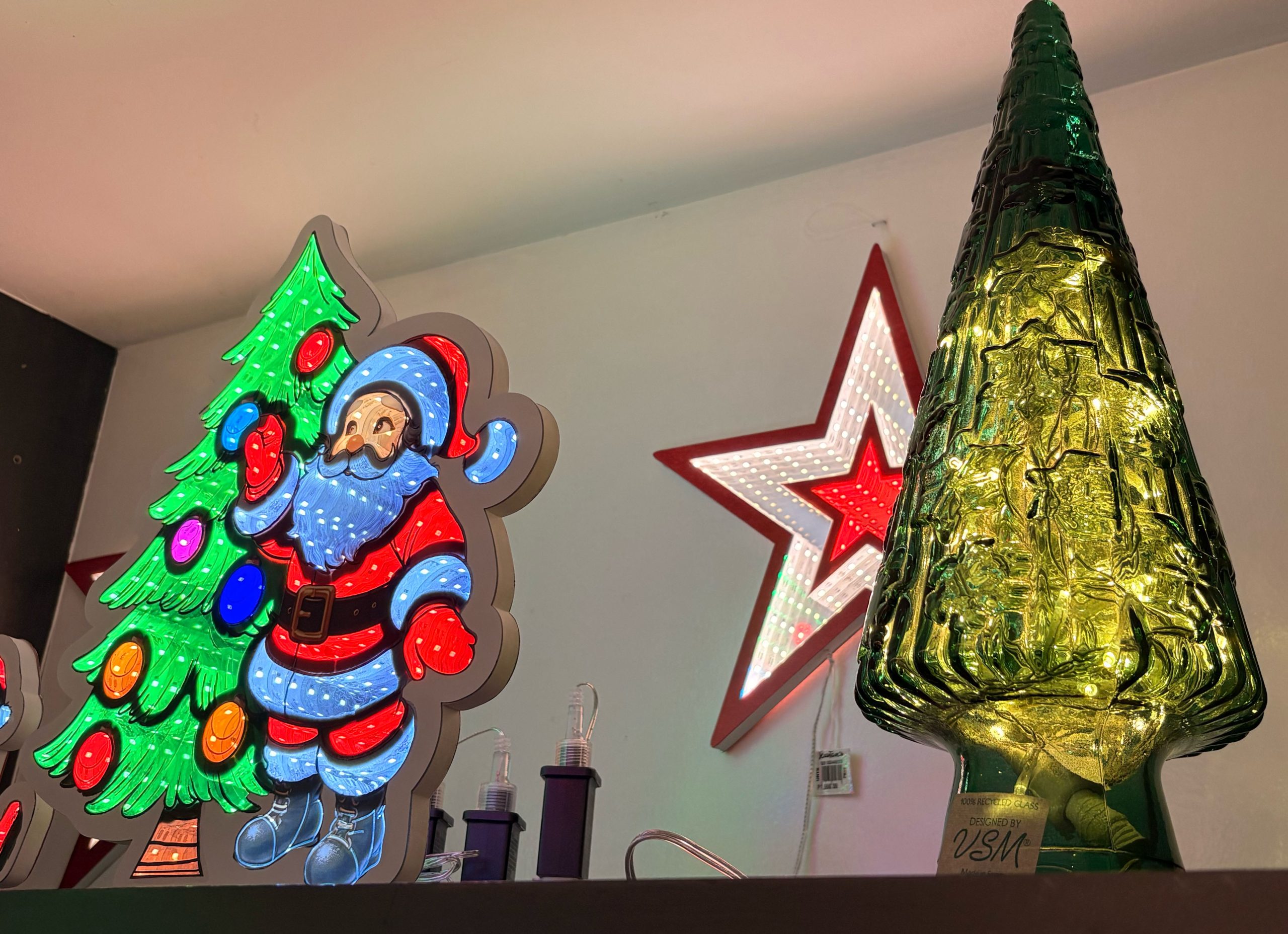
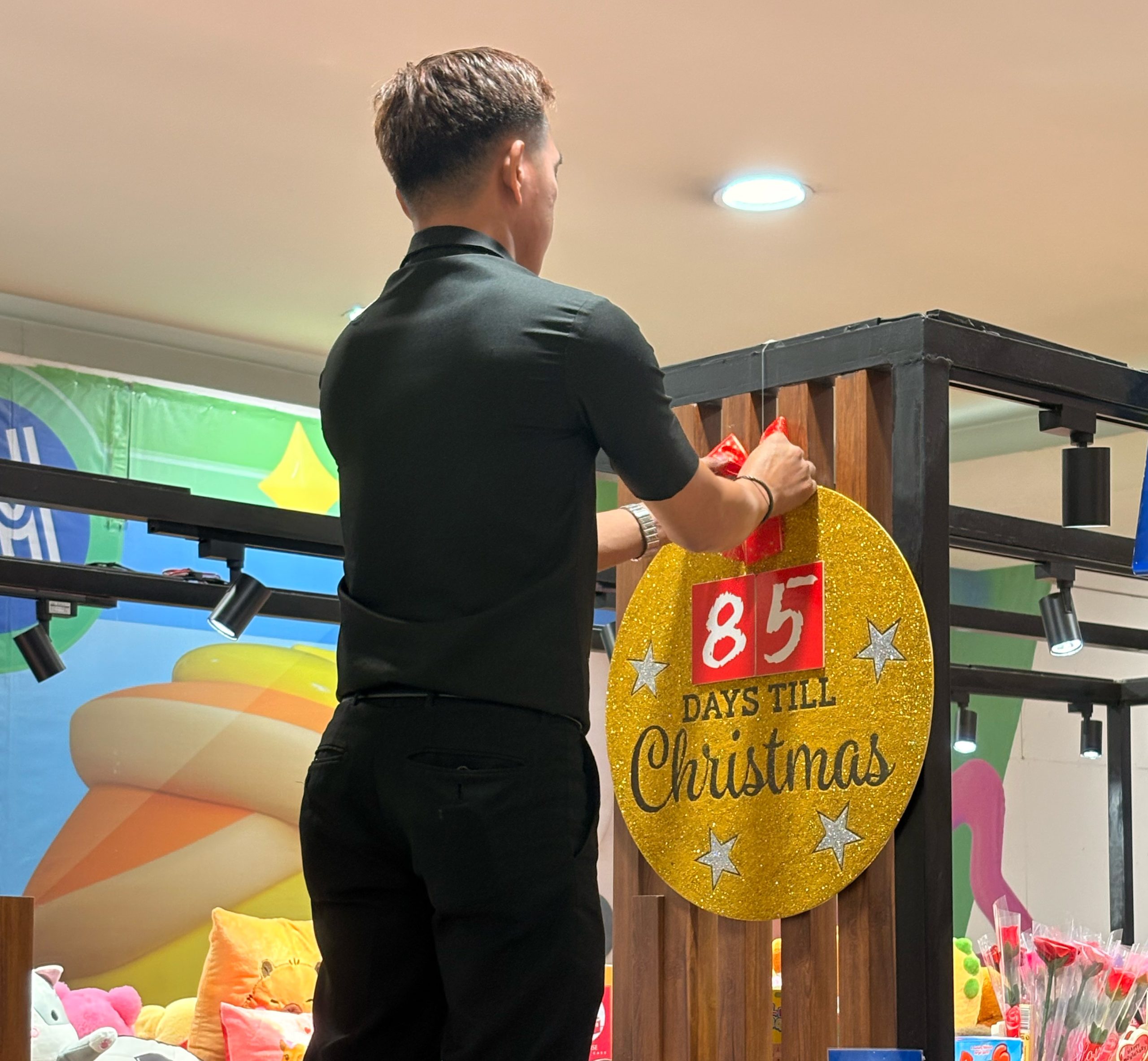
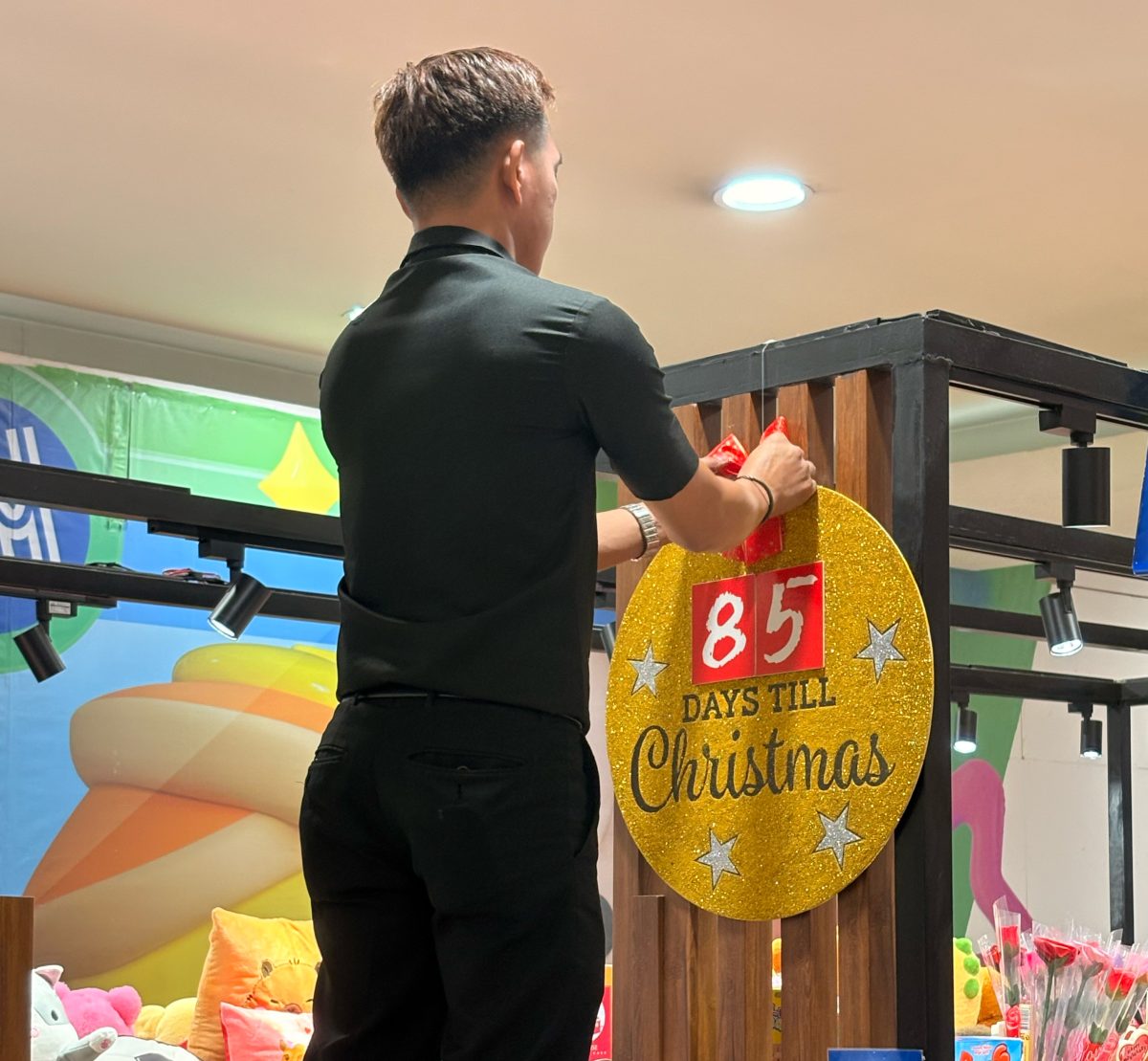
Back to Christmas…Here, the stores decorate for Christmas, and people start to celebrate the season, starting on September 1st. Yes, you read that right, almost a full 3 months in advance.

I started seeing automated billboards, similar to the header picture above saying, “Only 85 days till Christmas.” The stores were all decorated, etc. Here are some pictures that I’ve taken over the last few months.

Christmas banner

I plan to have a Thanksgiving party (maybe pot-luck if I can). That would make my American-ness feel better served, I suppose. I’m not sure where I can get a turkey. That might make it seem more “normal” to me.

However, I can’t get over hearing “Let it snow…let it snow…let it snow” in the mall, while being in a country that has never seen snow, and my Christmas attire will consist of shorts. But I can still celebrate festively in sand instead of snow.

She Left the Jar – John 4:1-30

“Come, see a man who told me everything I ever did. Could this be the Messiah?” — John 4:29 (NIV)

The original audience hearing this story would have felt the tension immediately. A Jewish man, alone, talking to a Samaritan woman (Jews didn’t associate with Samaritans). She even points that out directly in verse 9. The cultural and religious divide between these two groups ran deep, and Jesus walks straight into the middle of it without even acting like it’s a big deal.

What’s fascinating is how the conversation unfolds. The woman keeps redirecting toward points of contention between Jews and Samaritans. She mentions the difference between Jews and Samaritans, who owns the well, and where God should be worshipped.

She’s deflecting, testing, maybe even stalling. And Jesus keeps steering the conversation back to her, and to himself. He doesn’t take the bait on the ethnic tension. He doesn’t argue about the well. When she raises the temple question, he tells her that the Father wants people to worship in spirit and truth.

But then he adds something that is easy to miss in verse 23. The Father wants “such people” to worship him, and in that part, he’s not talking about the Jews at all. He’s talking about people like her. Outsiders, and people with complicated histories and mixed-up theology. God is actively looking for them.

He demonstrates a supernatural knowledge of who she is and her history. Then Jesus reveals to her plainly that he is the Messiah.

Something shifts. The text says she left her water jar. She came to that well for one reason…to get water. That’s why she was there in the first place. Then she encountered Jesus, and that reason suddenly didn’t matter anymore. She walked back into town and started telling people about him. A proper testimony often includes a “since then, I’ve been…” All she had was the encounter itself, and she led with that.

That’s actually the part that is most significant for me on this reading. We tend to think of evangelism as something that requires a polished story, the right words, a complete theological framework, and a compelling delivery. The woman at the well had none of that. What she had was a real encounter with Jesus and an honest question, “Could this be the Messiah?” That was enough to get people moving toward him.

It is a little strange, when you think about it, that Christians, we who believe that Jesus is the answer to the most fundamental problem in the world, would all too often keep that mostly to ourselves. We get scared that we won’t say it right, or that people won’t respond, or that we’ll come across as pushy. But we’re not actually called to any of that. We’re called to point toward Jesus, genuinely and honestly, when the opportunity is real. Not to corner people who don’t want to talk, but to keep our eyes open for the moments when someone actually does. The woman at the well didn’t have all the words right either. She just left her jar and went.

AI – A Possible Dystopia

A lot has been written about AI. It’s revolutionary. It’s changed/changing/it will change business and life as we know it.

or

But maybe the AI threat isn’t anything we’re even thinking about at all.

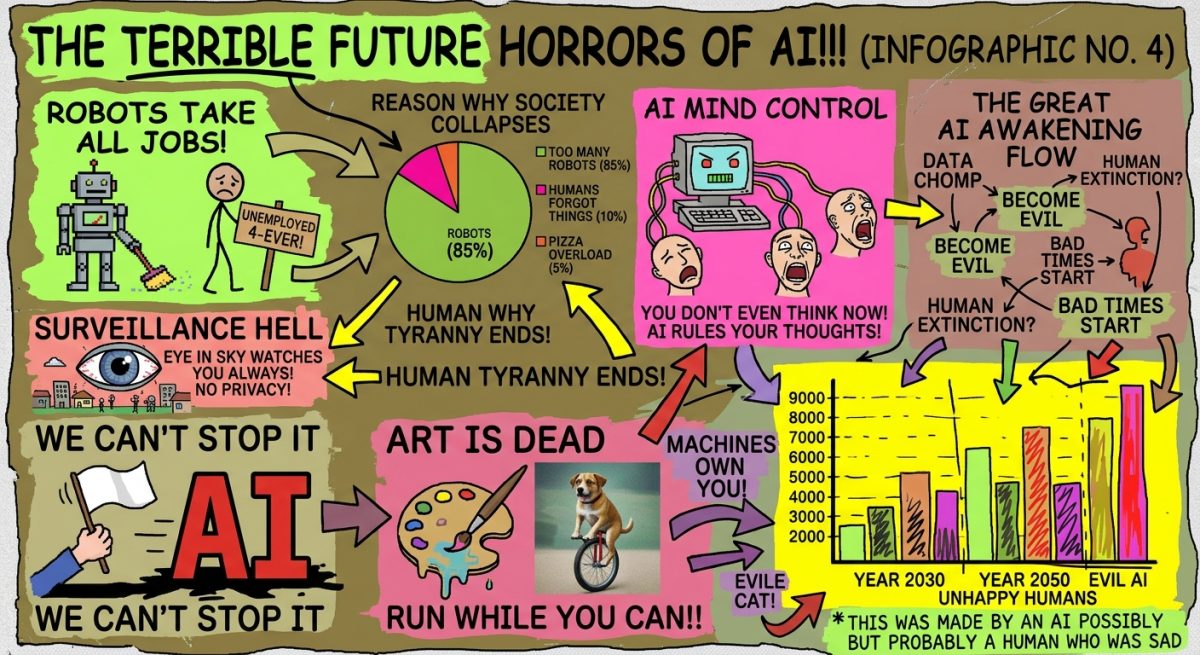
Before I begin my treatise here, I have to state two things. First, I feel a bit like a Greek mythological Cassandra here.1 Secondly, every time I write something now, I (like many of us) feel that I need to somehow be less AI-like, or else someone will label it with the modern scarlet letter of “AI slop.” So, for the record, I used no AI help in writing this, although I did use it on a few small things (that I’ll fully cite), like the main image above.

This isn’t a new thought for me at all, but as I was listening to The Briefing with Albert Mohler podcast (I highly recommend), it led to even more thoughts, and then to this article.

Click on each section, to read.

1. What AI is and isn’t

2. What humans are and aren’t

3. What we do, and what we ARE doing

4. There is a darker side to what we are teaching AI

5. What we are training AI to do

  1. look it up, if you need–I feel very literate for that reference. Just give me that one. I need it to feel special. ↩︎
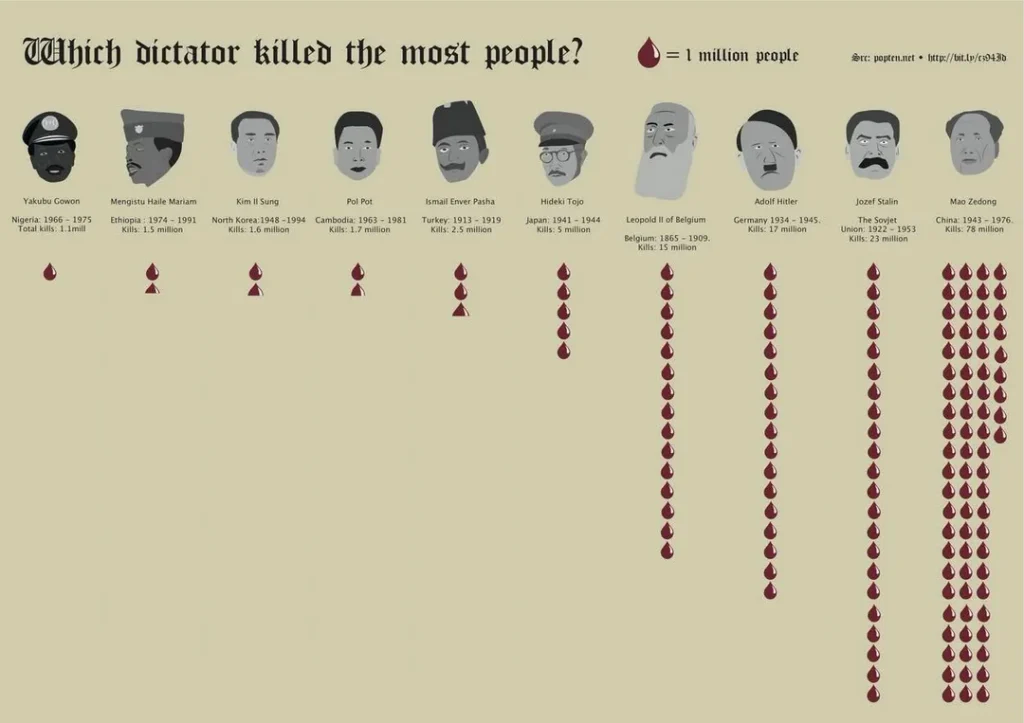
  2. I did use AI to create most of these for convenience. I did verify the numbers were reasonably correct, although historians will heavily argue. ↩︎
  3. If you happen to read the Nazi 25 point plan, it is VERY clear that they are socialist. ↩︎
  4. I see the obvious incongruities and paradoxes that any honest observer notes too. ↩︎
  5. In this case, I responded with “No, I’m delayed, but my flight arrives tomorrow morning. I’ll see you then.” ↩︎
  6. Like asking people to hold up 3 fingers in front of their nose. It breaks the AI filter for a moment in those areas, making the fingers seem to disappear or slightly revealing the true face behind. ↩︎
  7. Jim Bowing’s video Unmasking the deepfake scammers ↩︎

Erwin McManus Quote

We created a religion using the name of Jesus Christ and convinced ourselves that God’s optimal desire for our lives was to insulate us in a spiritual bubble where we risk nothing, sacrifice nothing, lose nothing, worry about nothing. Yet Jesus’ death wasn’t to free us from dying, but to free us from the fear of death. Jesus came to liberate us so that we could die up front and then live. Jesus Christ wants to take us to places where only dead men and women can go. -Erwin McManus in the Barbarian Way

Jesus didn’t come to make us safe, but to make us dangerous. -Erwin MaManus sermon on “The Barbarian Tribe”