
Mirrors

Generally in America, things like this don’t happen as much because standards of things like construction are just different. But here, it’s more of a “just deal with it,” mentality.

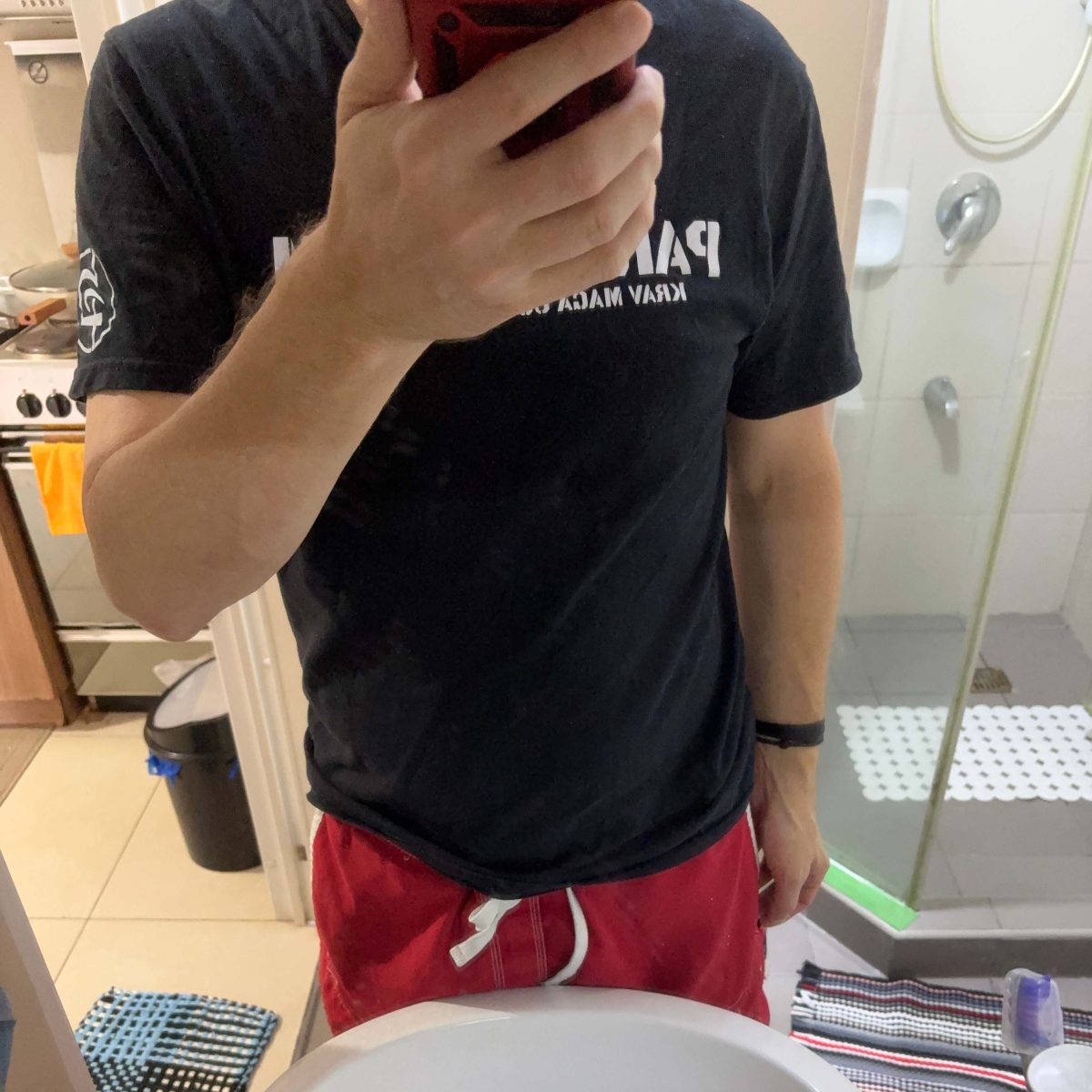
This is my bathroom mirror. Yep, that’s all of it…there aint no more (as they say).

You might be tempted to think that I just cropped the top of it off to make it look like it cut off there, but I didn’t. That is where the overhead cabinet basically starts, and that is where I took the picture from.

There is a small area (about half my hand width, above where the mirror ends and the cabinet starts, where I put a small mirror, that I angled so that I can see the bottom of my face, only. That helps me in daily shaving without having to find a chair, or bow low, thus making my back hurt in the process. although, when I shave my head, I still have to bow down or sit.

Filippino people are (on average) a bit shorter than me, but not at all that short. The average person wouldn’t fit in that mirror either. Every time I look at the mirror I wonder, “why didn’t they angle this up?”

Generally in America, things like this don’t happen as much because standards of things like construction are just different. But here, it’s more of a “just deal with it,” mentality. I think that brings up a positive and negative.

The negative is that you might think to just improve the quality of construction, and you wouldn’t be wrong. In my little apartment, it makes me laugh because if I drop a screw (or something small, made of metal) it makes a very different sound depending on which floor tile I am over. I know that this means that some tiles have a much different amount of thin-set mortar underneath. I wonder if the tiler was wearing a blindfold when he did the work.

There is a positive, though. The high standards in the US mean that people don’t “deal” with anything. If something is even slightly imperfect, many people will just want the thing redone to their liking. They might say, “I’m paying for it, so I want it done right.” They aren’t wrong.

But (and this is a big “but”), this creates an earned reputation of Americans being unable to deal with anything even slightly uncomfortable. Yes Michael Easter is very right, there is a Comfort Crisis in the West, and we’re not better-off by our addiction to that comfort. There should be a certain level of “just deal with it.”

So, I’ll learn to live with a mirror that only shows me the shirt I’m wearing. I’ll enjoy the pleasure of my little added mirror, and I’ll just deal with having to sit in a chair while shaving my head. I’ll be OK, and maybe even better-off for having braved the horror of such tremendous difficulty.

Cell Phones

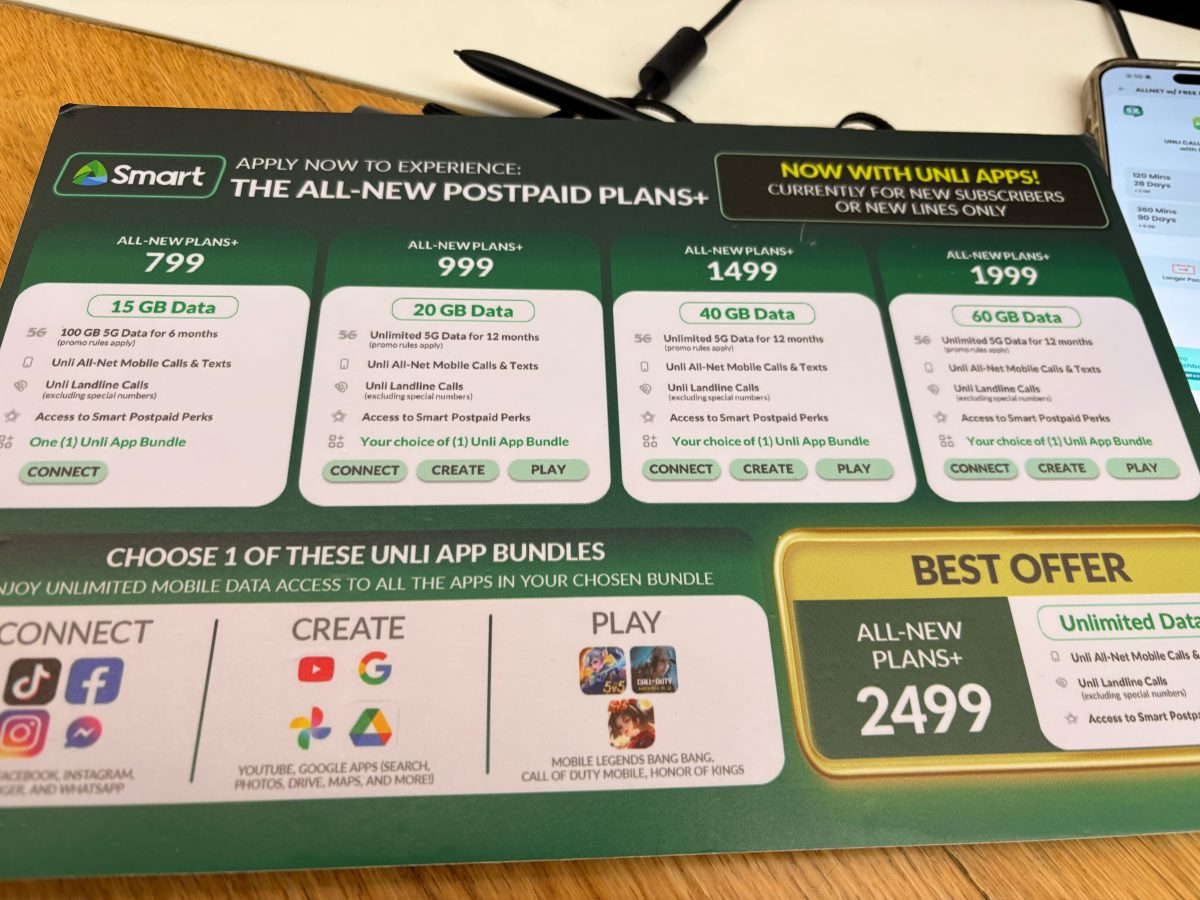
The whole thing here with cell phones is very very different than in America.

The whole thing here with cell phones is very very different than in America.

Usually in America, most people have a post-paid account. You know the drill. You pick a plan, usually something like 3-Unlimited GB/Mo, all the talking and all the texting that you want. Each month, you pay for the past month. If you go over your data, or do something strange, there’s an extra cost. You possibly even sign a contract and pay for a new phone on a deferred monthly basis.

Sometimes, people will have a pre-paid account. You pay before the month starts. There’s no help for a new phone, and there is also no commitment either.

Do they do it that way in the Philippines?

No, no they do not.

Is it easy

No, again. It is not at all.

If you are planning to come here, here is what you need to know, and I’ll put it in tidy bullet points.

  • If your phone has a slot for a SIM card (think older Iphones), then you should first go to a market or mall, or somewhere that sells sim cards.
  • If your phone does not have a slot for a SIM card, like mine (iPhone 16), then DO NOT go to a mall or market. You might have better luck than I did, but no one there had anything to sell related to an eSIM. Worse yet, someone might sell you a SIM kit that you cannot use. Here’s what you do:
    – The major cell carriers are Smart and Globe (there’s a new one called Dito, too). Which one to you importantly does have to do with the area you are in. Some areas are much better for one over the other. You will want to go to their website.
    – Pay for an eSIM (not the conversion kit). When you get that, follow the instructions for loading the eSIM onto your phone.
  • Grab a beer. It’s going to be a long day for you.
  • If you are an American, do not download their app! You can’t. Trust me. It doesn’t matter what you change…well, it does. The problem is that you will create other problems potentially by doing that (like your banking app might no longer work).
  • Have someone you know and trust load money onto your account. Alternatively, you can go to a store and “buy a load.” This is easy to do.
  • This part, I only know for Smart (because that is what I have), but if you are using Globe, then just Google it…dial *123# —>enter on your keypad and it will enter you into an online menu.
  • You can then buy the plan that you want. But be aware of the following:
    – If you buy data only, then you will get data only…That’s right no calling or texting.
    – If you buy calling or texting, then you will get no data at all.
    – If you buy a calling plan, it might (probably) only work for cell phones. If you want to call an office phone, you can’t.
  • In the West, people call and text each other…not here. In fact, almost no one I know does that…at all. They all use data for apps like Messenger, Viber, Telegram, etc. They don’t text or call.

Finally, be aware that you will do most of these steps each week or each month.

You can get a post-paid cell service that is easier, but people don’t do that often, I think.

I will leave the comments open on this one, just in case someone wants to speak into this a bit.

Travelogue Disclaimer

I’m an American. I’m here temporarily, living in the Philippines. I’ll be back soon in the land of my birth, while I’m here I want to experience this place.

That means eating the food that people here eat (and not going to McDonalds). It means acting like I’m a guest here and always putting my best manners on display (when I can). And it means seeing what God is doing in this place, because he’s definitely up to a lot.

I don’t believe that God is an American God, or that I am here to “teach people the superior ways of America.” That would be contrary to who God is, and while I love America, this place is neither superior nor inferior just for the sake of not being American.

That being said, I cannot escape the American lens through which I see the world. True maturity means that I can laugh at some of the silly things we do in America but at the same time, I can laugh at some of the silly things here too. There are plenty of them, both from the “that just isn’t the way we do things back home” sense, and a “Wait. You do what?!?” angle.

I fully intend this blog to be full of that stuff, but let me say it here once and for all time. I am a guest here. The people here are amazing. The culture here is wonderful. The food tastes great. I look at everything here (even the stuff I will joke about) with a sense of awe and wonder. So, when I say something that seems mean-spirited to you, I never mean it that way.

Ryan

Everything – Colossians 3:12-17

Paul has already laid out in the earlier part of this chapter what Christians are supposed to put off, the old identity, the old patterns, the old way of living. Now he gets to the other side of that.

“And whatever you do, in word or in deed, do everything in the name of the Lord Jesus, giving thanks to God the Father through Him.” — Colossians 3:17 (HCSB)

Paul has already laid out in the earlier part of this chapter what Christians are supposed to put off, the old identity, the old patterns, the old way of living. Now he gets to the other side of that. If you’ve taken off the old stuff, here’s what you put on instead: Compassion, kindness, humility, gentleness, patience, forgiveness, and over all of it, love. Love is the thing that holds everything else together and gives it direction, as Paul also makes clear in 1 Corinthians 13.

The opening phrase, “God’s chosen ones,” is one that theologians have argued about for centuries, and honestly it’s easy for me to get stuck in that loop. Calvinist predestination on one side, Arminian free will on the other, and a lot of very smart people who land in very different places. But I think that debate, as interesting as it is, misses the actual point of what Paul is saying here. However these people ended up belonging to God, they do. They are his. They are ingrafted into his family and heirs of the Kingdom. That’s the starting point, and then from that identity, the list of qualities Paul describes should flow naturally.

Which brings everything to verse 17. “Whatever you do, in word or in deed, do it in the name of the Lord, Jesus…” It’s not just the obviously spiritual stuff. Not just Sunday morning or the moments when I’m consciously trying to be a good person. Everything, which includes the conversation at work, the way I drive, how I treat the person who is taking too long in line, or the email I’m a little tempted to send with an edge to it. All of it is supposed to be filtered through the same question, “Is this in the name of Jesus? Would I do this the same way if I was doing it as his representative?”

I’ll fail at this constantly. That’s just honest. But the goal isn’t perfection, it’s direction. Keep pointing toward Christ in every single encounter, ask the Holy Spirit to do what I can’t do on my own, and when I fall short, get back up and keep going. Everything in the name of Jesus. Not just the big moments. Everything.

Reconciled – Colossians 1:15-23

That word, reconciliation, keeps showing up. It’s the same word Paul uses in 2 Corinthians when he talks about being committed to the ministry of reconciliation.

“But now He has reconciled you by His physical body through His death, to present you holy, faultless, and blameless before Him.” — Colossians 1:22 (HCSB)

Paul opens this passage with one of the most theologically loaded descriptions of Jesus in the entire New Testament. Jesus is the image of the invisible God. The firstborn over all creation. The one through whom everything was created visible and invisible, thrones and powers, things in heaven and things on earth. Everything was created through him and for him. And then this line that stops me cold every time…”in him all things hold together.” He didn’t say just spiritual things, or even just religious things. Everything. The whole created order coheres in Christ.

It’s worth sitting and ruminating on that for a minute rather than rushing past it. He’s pointing directly at who Jesus is in the grand sweep of all reality. He is fully God. He is before all things. He is the head of the Church and the firstborn from the dead. This is the kind of passage that probably should be memorized by anyone who takes their faith seriously, because it pretty well encapsulates everything about who Jesus is and what that means for the rest of existence. But, even that all things hold together, not just fly apart into space, because of Jesus.

Then Paul makes it personal. Starting in verse 21, he turns toward us. We were alienated. Enemies of God in our minds. Our behavior reflected that alienation. And then…because of who Jesus is, because of what he did through his physical death on the cross, we have been reconciled. Not improved. Not partially forgiven. Reconciled. Presented before God holy, faultless, and blameless. That’s the thesis of the whole passage sitting right there in verse 22. The gap that existed between us and God has been closed, completely, by Jesus.

That word, reconciliation, keeps showing up. It’s the same word Paul uses in 2 Corinthians when he talks about being committed to the ministry of reconciliation. We have been reconciled to God, and then immediately commissioned to carry that same reconciliation outward in helping bring people back into right relationship with God and with each other. That’s not a secondary calling or an optional add-on to the Christian life. It’s central to everything.

So I need to keep my eyes and ears open to where that is happening around me and join it. People are alienated from God and from each other everywhere we look. The same Jesus through whom all things hold together is also the one who tears down the walls that divide. That’s the work I’m called to participate in. When I actually stop and think about what Christ has done, holding the entire created order together, that God chose to reconcile me to himself through his own death, the only honest response I know is to say “Wow.”